
NY Retail Worker Safety Act: Silent Response Buttons by January 1, 2027
Last reviewed: October 2026. What the New York Retail Worker Safety Act requires of retailers, what a silent response button must do, and how to be ready by January 1, 2027.
This page is for information only and is not legal advice. Confirm how the law applies to your business with counsel.
Last reviewed: October 2026. From January 1, 2027, every employer with 500 or more retail employees in New York State must provide every retail employee with a silent response button that requests immediate assistance from a security officer, manager or supervisor. The button can be installed in an easily accessible place in the store, worn, or run on a phone the employer provides. Wearable and phone-based buttons may not track employees except when pressed. Every retailer with 10 or more retail employees in the state also needs a workplace violence prevention policy and staff training.
The short version
- Deadline: January 1, 2027.
- Who: employers with 500 or more retail employees statewide, counted across all their New York stores.
- What: a silent button for every retail employee that calls a security officer, manager or supervisor. Internal help, not 911.
- Which kind: fixed in an easily accessible location, wearable, or a phone app on employer-provided phones.
- Privacy rule: wearable and phone buttons may not track where employees are, except when the button is pressed.
- Proposed rules (September 2026): buttons can be shared or fixed, as long as every employee can easily reach one throughout their shift. Ordinary phones and walkie-talkies don't count. Every employee gets written instructions.
- Grocery and convenience stores are covered too. Only businesses that mainly sell food eaten on the premises, such as restaurants, are excluded.
- Already in force for 10+ employees: a written workplace violence prevention policy and training.
- Outside New York: no other state has the same button duty, but Washington, Florida, California and several Canadian provinces have their own retail rules. See "Beyond New York" below.
Who is covered
The Act applies to employers with at least 10 retail employees in New York State. A "retail store" is "a store that sells consumer commodities at retail and which is not primarily engaged in the sale of food for consumption on the premises". The only carve-out is for businesses that mainly sell food eaten on site, such as restaurants and cafes. Grocery stores, supermarkets, pharmacies, convenience stores, gas station shops, big box stores, clothing, electronics, home goods and general merchandise stores are all in. The Department of Labor's own guidance lists gas stations, convenience stores, big box stores, sporting goods stores, drug stores, beauty stores and factory outlets as examples.
The silent response button duty applies only to employers of 500 or more retail employees statewide. The count runs across all your New York locations, so a chain of 25 stores with 20 staff each is covered. The Act doesn't say how to count part-time or seasonal staff; ask counsel if you're near the line.
According to the Department of Labor, cleaning companies whose employees work on site in retail stores are also covered by the policy and training requirements.
Sources: NY Labor Law §27-e; NY DOL, Retail Worker Safety Act FAQ; NY DOL, Retail Worker Safety guidance. Checked October 2026.
What the button must do
The law, Labor Law §27-e(5)(a):
"Every employer of five hundred or more retail employees statewide shall provide every retail employee with a silent response button to request immediate assistance from a security officer, manager, or supervisor while the employee is working at the employee's location in case of an emergency."
In practice that means:
- Silent. No alarm sounding in the store. The point is to get help without escalating the situation.
- Internal responders. The alert goes to security, a manager or a supervisor. The law doesn't require a 911 or police connection. What it does require is that someone on site can come immediately, so every shift in every store needs a named responder.
- Your choice of form. A device "installed in an easily accessible location in the workplace", or "a wearable or mobile phone-based button".
- Phones only if you provide them. "Mobile phone-based silent response buttons may only be installed on employer-provided equipment" (§27-e(5)(b)). An app on an employee's personal phone doesn't count.
- No tracking. Wearable and phone-based buttons "shall not be used to track employee locations except when the silent response button is triggered." Under the proposed rules, tracking must also stop once the emergency is over.
- Built for the job. The Department of Labor's proposed rules say a silent response button "must be specifically designed to silently request immediate assistance in the case of an emergency", as distinguished from general communication tools "such as mobile or desk phones, handheld transceivers (walkie-talkies), or all-purpose email applications". A radio on the belt or a store phone won't do.
Does every employee need their own button?
Not necessarily. The statute says employers must "provide every retail employee with" a silent response button, and the Department of Labor's FAQ talks about "access to" one. The Department's proposed rules, published on September 30, 2026, spell out what that means:
- Sharing is allowed. "Multiple employees can be directed to utilize the same silent response button" if it is easily accessible to each of them.
- Fixed buttons can cover a store. You can install "multiple devices in easily accessible locations throughout a workplace", as long as "at least one device location is easily accessible to every employee throughout their shift".
- Easily accessible means reachable in an emergency. A button behind a locked door, or anywhere staff can't get to quickly, doesn't count.
- Written instructions. Every employee must get written instructions on how to use the buttons you provide.
- No retaliation against an employee who presses a button by accident or in good faith.
The rules are a proposal. Comments close on November 29, 2026, and the final text may change. In practice: fixed buttons at registers, fitting rooms, stockrooms and back offices, plus wearables for anyone who works out of reach of a fixed button.
Source: NY State Register, September 30, 2026, Department of Labor proposed rule LAB-39-26-00022-P (12 NYCRR Subpart 27-2), page 27. Checked October 2026.
Which type fits which role
| Button type | Fits | Watch out for |
|---|---|---|
| Fixed, at a set location | Registers, service desks, fitting rooms, stockroom doors | Every employee must be able to reach at least one quickly throughout their shift; never behind a locked door |
| Wearable | Floor staff, stockroom, opening and closing shifts | Each employee needs one on shift; it must not track location |
| Phone app | Stores that already issue phones to staff | Must be on employer-provided phones; unlocking a phone isn't silent or fast |
Most chains will mix them: fixed buttons at registers, wearables for everyone on the floor.
Policy and training (already required)
For all employers with 10 or more retail employees, the Department of Labor describes these requirements:
- A written workplace violence prevention policy, given to employees when hired and once a year.
- Training, at hire and then annually (50 or more retail employees) or every two years (49 or fewer), during paid work time.
- Written button instructions (proposed rules): every employee gets written instructions on how to use the buttons you provide.
- Templates are available from the Department of Labor, in English and the employee's primary language where a translation exists. When you use them, add site-specific content such as the security devices in your stores. From 2027 that includes the buttons and what happens when one is pressed.
Retaliating against employees who raise workplace violence concerns is unlawful under the Act. Section 27-e doesn't set its own penalty amounts. The Department of Labor has proposed rules on the buttons (see above) but has not set penalties for them. Ask counsel how the button duty will be enforced.
Your 11-week checklist
- Count retail employees across all New York stores. Confirm with counsel if you're near 500, or if you mainly sell food eaten on the premises.
- Map every store: where people work, where they work alone, and where fixed buttons would sit.
- Choose the button type per role: fixed, wearable or both.
- Name responders for every shift in every store, and a backup when the manager is the only one there.
- Set up alert routing: who gets the message, by what channel, and what the message says (store and button).
- Write instructions and update training so every employee knows how and when to use the buttons.
- Test every store before January 1, 2027, and write down that you did.
Beyond New York
New York is the only US state that requires silent response buttons across retail. If you run stores elsewhere, though, other rules already reach your staff. Most chains won't want a New York exception; they'll want one setup for every store.
| Where | Rule | Who it covers | What it requires |
|---|---|---|---|
| Washington | RCW 49.60.515, WAC 296-137 | Retailers (and hotels, security and property services) with isolated janitors, security guards, housekeepers or room service attendants | A panic button for each isolated employee. It must be carried, need no passwords or multiple screens, let responders find the worker, and work on every shift regardless of cellular or WiFi coverage. Enforced since January 2026, with fines up to $10,000 for repeat willful violations. |
| Florida | Stat. 812.173 | Convenience stores open between 11 p.m. and 5 a.m. | "A silent alarm to law enforcement or a private security agency", plus cameras, a drop safe and lighting. |
| California | Labor Code §6401.9 (SB 553) | Most employers, retailers included | A workplace violence prevention plan with "effective means to alert employees" of emergencies and procedures for getting help. No device mandate. A permanent Cal/OSHA standard is due by December 31, 2026. |
| Alberta | OHS Code s. 392.2 and 392.5 | Retail fuel and convenience stores | Every worker working alone must wear a personal emergency transmitter, monitored by the employer or someone they designate. |
| Saskatchewan | OHS Regulations 2020, s. 3-27 | Late-night retail with one worker alone between 11 p.m. and 6 a.m. | A check-in system plus "a personal emergency transmitter to be worn by the worker". |
| British Columbia | OHS Regulation s. 4.22.1 | Late-night retail and gas stations, 11 p.m. to 6 a.m. | One of several compliance options, one of which includes a monitored personal emergency transmitter. |
| United Kingdom | Crime and Policing Act 2026 | All retailers | Created a standalone offence of assaulting a retail worker (Royal Assent April 2026). No device duty, but employers must still assess and control the risk of violence. |
Hotel staff have their own panic button laws in New Jersey, Illinois, Washington and many cities, covered in our hotel panic button laws guide. For staff who work alone in any sector, see lone worker laws by country.
If you're rolling out silent response buttons in New York anyway, the simplest path is usually the same setup in every store: one system, one dashboard, one way of training staff.
Sources: RCW 49.60.515; WAC 296-137; Fla. Stat. 812.173; Cal. Labor Code §6401.9; Alberta OHS Code Part 27; Saskatchewan OHS Regulations 2020; WorkSafeBC OHS Regulation Part 4; Crime and Policing Act 2026, s. 46. Checked October 2026.
How Shortcut Labs supports your silent response buttons
Shortcut Labs builds Flic buttons and Message Button, a service that turns a button press into a message to the people you choose. For New York retailers we set it up with no employee phones involved:
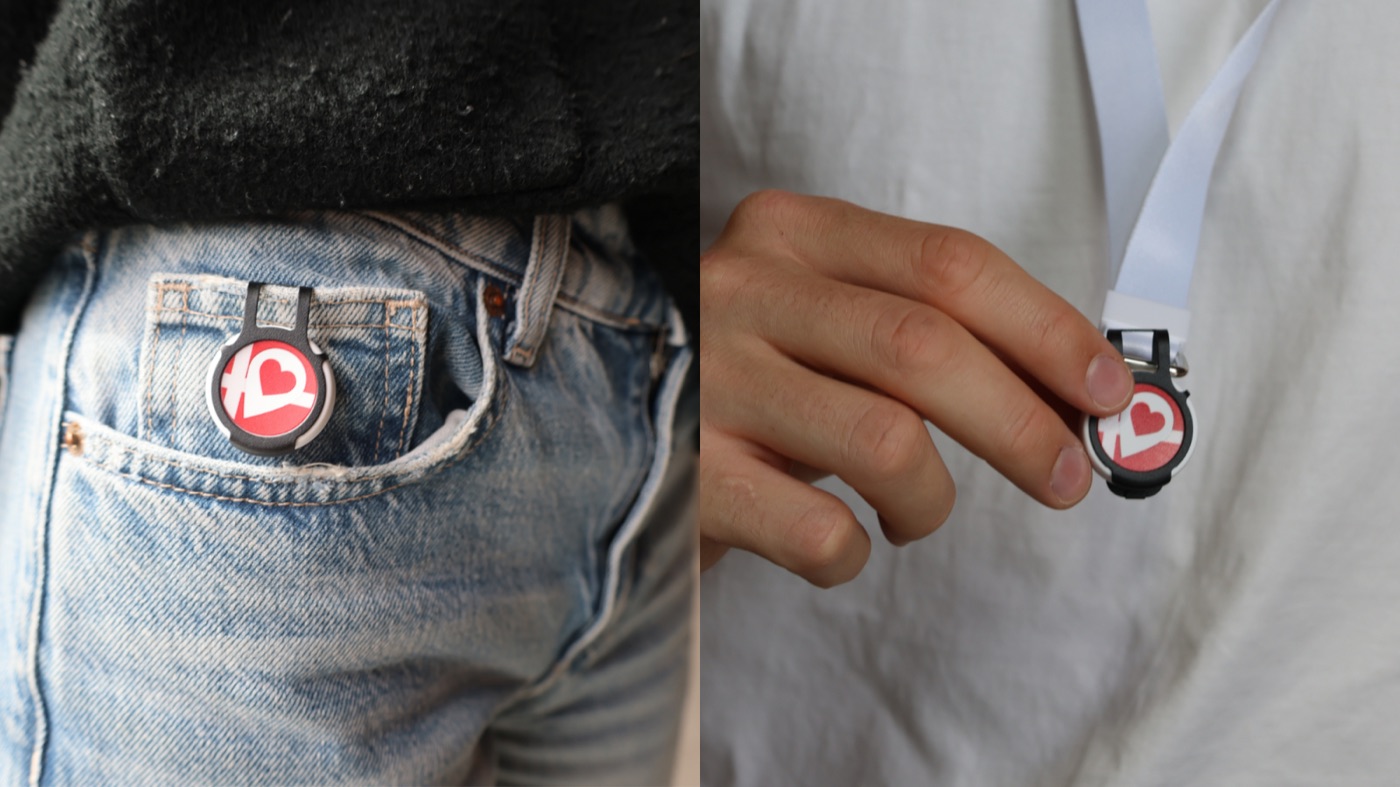
- A button for every employee, or wherever you need one. Flic buttons clip to a lanyard or uniform, or mount at registers, fitting rooms and stockroom doors. Pressing one makes no sound.
- A hub in the store, not a phone in the pocket. Buttons connect to a Flic Hub on the store's WiFi or Ethernet, or to the Flic IoT Gateway on its own cellular connection if you'd rather keep it off the store network. No employee phones, no apps on personal devices, and nothing tracking where staff are.
- The right people, straight away. A press sends your message to up to five recipients by SMS, email, voice call or a shared Chat Room, where staff can respond and mark the request handled. Each button carries its own message, so the alert says which store and which register, fitting room or employee.
- Three actions on one button. Press, double press and hold can send different messages, for example "assistance needed" and "security now".
- One job only. Set up with Message Button, each button does one thing: send your silent request for help. It isn't a phone, a radio or an email app.
- Managed centrally. Change recipients and messages remotely from one admin dashboard as staff and shifts change.
- In stores within weeks. Buttons and hubs ship within weeks of your order, so there is still time to be live before January 1, 2027.
- A quote within 24 hours. Tell us your New York stores and headcount, and you'll have a setup and a price per store within 24 hours.
The button is one part of compliance. Responders on every shift, the policy and the training are yours. We'll help you get the hardware and alerting live in time.
Talk to us this week. Tell us how many stores and staff you have in New York, and we'll come back with a setup and a price per store within 24 hours.
Frequently asked questions
When do New York retailers need silent response buttons?
By January 1, 2027. Employers with 500 or more retail employees in New York State must provide every retail employee with a silent response button from that date (Labor Law §27-e(5)).
Which employers does the NY Retail Worker Safety Act cover?
Employers with at least 10 retail employees in New York State must have a workplace violence prevention policy and training. The silent response button requirement applies to employers with 500 or more retail employees statewide. A retail store is one that sells consumer commodities at retail and is not primarily engaged in the sale of food for consumption on the premises, so only restaurant-type businesses are excluded.
Does the silent response button have to call 911?
No. The law requires the button to request immediate assistance from a security officer, manager or supervisor. It's an internal alert. You need a named responder who can come immediately on every shift.
Can we use a phone app as the silent response button?
Yes, but only on employer-provided phones, and the app may not track employees' locations except when the button is triggered. An app on an employee's personal phone doesn't meet the requirement, and under the Department of Labor's proposed rules an ordinary phone or walkie-talkie doesn't count as a silent response button. Many retailers use fixed or wearable buttons instead, so no phones are needed.
Does every employee need their own button?
Not necessarily. Under the Department of Labor's proposed rules (September 2026), employees can share a button, and fixed buttons in several locations are enough as long as every employee can easily reach at least one throughout their shift. A button behind a locked door doesn't count. Staff who work out of reach of a fixed button need a wearable.
Do grocery stores have to comply?
Yes, if the employer has 500 or more retail employees in the state. The Act only excludes stores "primarily engaged in the sale of food for consumption on the premises", meaning restaurant-type businesses. Grocery stores, supermarkets, convenience stores and gas station shops sell food to take away, so they are covered. The Department of Labor's guidance names gas stations and convenience stores as covered workplaces. If you run a store with a large eat-in food service, check with counsel.
What training does the law require?
Retail employers with 10 or more employees must train staff at hire and then annually (50 or more retail employees) or every two years (49 or fewer), during paid time, and give staff the written workplace violence prevention policy at hire and every year. Once the buttons are in place, training should cover how and when to use them.
Do other states require panic buttons for retail workers?
Not in the way New York does. No other state requires silent response buttons for all retail employees. Washington requires panic buttons for isolated janitors and security guards at retail employers. Florida requires a silent alarm in convenience stores open late at night. California requires every retailer to have a workplace violence prevention plan with a way to alert employees. In Canada, Alberta and Saskatchewan require worn personal emergency transmitters for staff alone at convenience stores and late-night retail.
What happens if we miss the deadline?
Section 27-e doesn't set its own penalty amount. The Department of Labor proposed rules in September 2026 that define the buttons and how to provide them, but they don't set penalties. Retaliation against employees who raise safety concerns is unlawful. The bigger risk is practical: an incident in a store where staff had no required way to call for help.
This page is provided for general information by Shortcut Labs and is not legal advice. Verify current requirements with qualified counsel.
Get a quote within 24 hours.
Tell us how many stores and staff you have in New York, and we will come back with a setup and a price per store within 24 hours.
- Silent buttons, worn or mounted where staff work
- Alerts to your managers by SMS, email, call or Chat Room
- No employee phones, nothing tracking staff