
Lone Worker Laws by Country: What Employers Must Do in the US, UK, Europe, Canada and Australia
Last reviewed: October 2026. What employers must do for staff who work alone in the US, UK, Europe, Canada, Australia and New Zealand, with a source for every rule.
This guide is for information only and is not legal advice. Requirements change and details matter. Confirm the current text of any law with your counsel before making decisions.
Last reviewed: October 2026. Across the US, UK, Europe, Canada and Australia, lone worker laws come down to one demand: assess the risks of working alone, and make sure a lone worker can raise the alarm and get help quickly, backed by check-ins and procedures that are tested. Some places name the device outright: New York requires silent response buttons in large retailers from January 2027, Washington requires panic buttons for isolated janitors, security guards and hotel staff, Alberta and Saskatchewan require worn personal emergency transmitters at convenience stores and late-night retail, and Sweden requires an alarm wherever violence can occur and safety demands it. Elsewhere the law sets the outcome ("effective communication" in Alberta, Australia and New Zealand; "quick help" in Sweden) and leaves the tool to the employer, who must be able to show it works.
The short version
- The duty is help, fast. Every regulator in this guide expects a lone worker to be able to raise the alarm and get help in time. Devices, scheduled calls, supervisor visits and return-to-base checks are the tools; the test is whether help actually arrives.
- Some laws name the device. Panic buttons, silent response buttons and worn emergency transmitters are mandatory for specific workers in New York, Washington, Alberta, Saskatchewan and US hotels. See the box below.
- It has to work where people actually are. Australia's code of practice warns that mobile phones "cannot be relied upon" in many locations. Washington says the signal can't depend on poor cellular or WiFi coverage. An alarm in a drawer, or with a dead battery, fails the test.
- Plan for the worker who can't make a call. Sweden, Germany, France and Spain all expect a backup for a worker who is knocked out or can't reach a phone: a one-press alarm, automatic alerts (no movement, missed check-in) or regular contact.
- Violence raises the bar. Sweden bans lone work with a tangible violence risk. Ontario requires procedures for "summoning immediate assistance" in every workplace violence program. Late-night retail in Alberta, BC and Saskatchewan has its own device rules.
- Working alone itself is legal in every country here, once the risks are assessed and controlled. A few tasks can never be done alone (confined spaces, live electrical work, diving and similar).
Where the law names the alarm
| Where | What the text says | Who it covers |
|---|---|---|
| New York, Labor Law §27-e(5) | Every retail employee gets a "silent response button to request immediate assistance", from January 1, 2027 | Retailers with 500+ retail employees statewide |
| Washington, RCW 49.60.515 | "Provide a panic button to each isolated employee" | Janitors, security guards, hotel housekeepers, room service attendants working largely alone |
| US hotels (NJ, IL, NYC, Chicago, Seattle, Miami Beach, California cities) | Panic buttons for staff working alone in guest rooms | Hotels (full guide) |
| Florida, Stat. 812.173 | "a silent alarm to law enforcement or a private security agency" | Convenience stores open 11 p.m. to 5 a.m. |
| Alberta, OHS Code s. 392.5 | A lone worker "must wear the personal emergency transmitter" | Retail fuel and convenience stores |
| Saskatchewan, OHS Regs s. 3-27(6) | "a personal emergency transmitter to be worn by the worker" | Late-night retail, one worker alone 11 p.m. to 6 a.m. |
| British Columbia, OHS Reg s. 4.22.1 | Monitored personal emergency transmitter as part of one compliance option | Late-night retail, 11 p.m. to 6 a.m. |
| Sweden, AFS 2023:2 5 kap. 6 § | Alarm to call for help where violence can occur, if needed for safety, with drills and maintenance | All employers |
| Finland, Työturvallisuuslaki §29 | Employer must ensure "the possibility of raising the alarm" | All lone work |
| Oregon, ORS 654.421 | Home health staff may refuse a visit without a communication device (or a second employee) | Home health (healthcare guide) |
Everywhere else, the law sets the outcome and you choose the tool. You still have to show it works.
What these laws have in common
- A risk assessment that covers lone work. In the UK it goes in the general risk assessment; in Germany it's the Gefährdungsbeurteilung; in France the document unique; in Spain the evaluación de riesgos.
- A written procedure. Who checks on the worker, how often, what happens when they don't answer. BC and Manitoba spell this out in law.
- A way to raise the alarm. Phone, radio, panic button, app or a person nearby. The higher the risk, the more the law expects the alert to work even if the worker can't trigger it.
- A responder. Someone has to receive the alert and act. Sweden requires fixed routines for who receives alarms and what they do next.
- Training, drills and testing. HSE, Arbetsmiljöverket and DGUV all expect the system to be tested regularly.
- Hard limits for the highest-risk work. A second person, or no lone work at all.
United States
Federal: OSHA
There is no federal lone worker standard. OSHA says: "There is no general OSHA Standard that deals with the situation of an employee 'working alone' except in specific situations such as emergency response, interior structural firefighting, or working in permit required confined spaces." Its FAQ encourages employers to give lone workers a wireless notification device or a cell phone, but calls these "recommendations and not typically enforceable."
The binding duty is the General Duty Clause, 29 U.S.C. 654(a)(1): every employer must provide a workplace "free from recognized hazards that are causing or are likely to cause death or serious physical harm." OSHA uses it for workplace violence. In 2024 it cited a convenience store operator in Orlando after a cashier was shot around 1 a.m., for missing basic deterrents.
Some sector rules require a second person or regular accounting for lone workers: - Permit-required confined spaces (29 CFR 1910.146): an attendant must stay outside for the whole entry. - Shipyards (29 CFR 1915.84, "Working alone"): employees alone in a confined space or isolated location must be accounted for "by sight or verbal communication" at regular intervals. - Electric power work above 600 volts (29 CFR 1910.269(l)(2)): at least two employees for listed work. - Underground construction (29 CFR 1926.800): a worker alone in a hazardous location needs an effective means of getting help. - Mines (MSHA, 30 CFR 56.18020 and 57.18020): no working alone in hazardous conditions unless the worker can communicate with others, be heard or be seen.
Sources: OSHA FAQ; 29 U.S.C. 654; 29 CFR 1915.84; 29 CFR 1910.146; OSHA news release, 2024-08-14. Checked October 2026.
State and local rules
The real US requirements are state and local, and each targets a specific group of workers:
- New York retail (Labor Law §27-e): from January 1, 2027, every employer of 500 or more retail employees statewide must provide every retail employee with a "silent response button to request immediate assistance" from a security officer, manager or supervisor. It is not a 911 button. The state's guidance accepts a physical button, a wearable device or a mobile phone app; phone-based buttons must be on employer-provided devices and may not track location except when triggered. Source, NY DOL FAQ
- Washington isolated workers (RCW 49.60.515, WAC 296-137): hotels, motels, retailers, security guard entities and property services contractors must "provide a panic button to each isolated employee". "Isolated employee" covers janitors, security guards, hotel or motel housekeepers and room service attendants who work largely alone. The device must be carried, work without passwords or multiple screens, let responders find the worker, and work in every location and shift regardless of cellular or WiFi coverage. Labor & Industries enforces since January 2026, with fines up to $10,000 for repeat willful violations. RCW 49.60.515, WAC 296-137, L&I guidance (12-2025)
- Hotels: New Jersey, Illinois, New York City, Chicago, Seattle, Miami Beach and many California cities require panic buttons for hotel staff working alone in guest rooms. See our US hotel panic button laws guide.
- Florida convenience stores (Fla. Stat. 812.173): stores open between 11 p.m. and 5 a.m. must have "a silent alarm to law enforcement or a private security agency", plus cameras, a drop safe and lighting. Source
- California (SB 553, Labor Code §6401.9): most employers need a workplace violence prevention plan that covers how employees get help in an emergency, and the incident log must record whether the worker was "isolated or alone". No device is mandated. Source
- Healthcare and home health: California, Washington, Oregon and others have specific rules. Oregon lets home health staff refuse a visit to a patient they believe may assault them unless they have a communication device or a second employee. See our healthcare workplace violence laws guide.
Checked October 2026.
United Kingdom
England, Scotland and Wales
Working alone is legal. The Health and Safety at Work etc. Act 1974 (s.2) requires employers to ensure, so far as reasonably practicable, the health, safety and welfare of employees, including safe systems of work and supervision. The Management of Health and Safety at Work Regulations 1999 (reg. 3) require a risk assessment, written down if you have five or more employees. HSE says there is no legal requirement for a separate lone worker risk assessment: lone working goes into your general one.
HSE's guide Protecting lone workers (INDG73, rev 4, March 2020) expects employers to train, supervise and monitor lone workers, keep in touch, and have tested emergency procedures. Monitoring options it lists: - supervisor visits; - pre-agreed regular contact by phone, radio or email; - "other devices designed to raise the alarm in an emergency which can be operated manually or automatically"; - a reliable system to confirm the worker got back to base or home.
For some high-risk work HSE says at least one other person may need to be present, for example in confined spaces, near exposed live conductors, diving, vehicles carrying explosives and fumigation.
Many UK buyers specify BS 8484:2022, the code of practice for lone worker services. It is voluntary, not a legal requirement.
Sources: HSWA 1974 s.2; MHSWR 1999 reg. 3; HSE INDG73; HSE, training, supervision and monitoring; BSI, BS 8484. Checked October 2026.
Northern Ireland
The 1974 Act does not extend to Northern Ireland. The equivalent duties are in the Health and Safety at Work (Northern Ireland) Order 1978 and the Management of Health and Safety at Work Regulations (Northern Ireland) 2000. HSENI's guidance is stricter than HSE's: it lists work where lone working "cannot be justified", including confined spaces where rescue may be needed, work at height on a harness and lanyard, and health and social care work with unpredictable client behaviour. HSENI lists "automatic electronic warning devices which activate if specific signals are not received" among monitoring options.
Sources: HSENI, Lone working; MHSW Regulations (NI) 2000 reg. 3. Checked October 2026.
Europe
Across the EU, the baseline is the Framework Directive 89/391/EEC: employers must evaluate risks and organise first aid and emergency measures "adapted to the nature of the activities". It says nothing specific about lone work, so each country fills that in.
Source: Directive 89/391/EEC. Checked October 2026.
Sweden (ensamarbete)
Sweden has the most explicit lone working rules in Europe. Since January 1, 2025 they sit in AFS 2023:2, chapter 6 (Ensamarbete), which replaced AFS 1982:3. The Work Environment Act (Arbetsmiljölagen, 3 kap. 2 §) already requires employers to consider the particular risks of working alone.
- Definition: ensamarbete is work where the employee is physically isolated and needs communication equipment to reach others, or has people nearby but can't be sure of help in a critical situation.
- Planning: so far as possible, the lone worker should not face greater risk than if several people did the job together (6 kap. 4 §).
- Quick help: "Om ensamarbete innebär en påtaglig risk för kroppsskada genom olycksfall, ska arbetsgivaren ordna så att arbetstagaren kan få snabb hjälp i en nödsituation." In English: if lone work involves a tangible risk of injury from an accident, the employer must arrange for the worker to get quick help in an emergency (6 kap. 6 §).
- If safety can't be arranged, the work must not be done alone (6 kap. 7 §). Minors may not do such work alone.
- Violence: lone work involving a tangible risk of violence or threats is banned outright (5 kap. 7 §). Where violence can occur, there must be an alarm to call for help if needed for safety, fixed routines for who receives the alarm and what happens next, regular drills, and maintenance and checks of alarm equipment (5 kap. 6 §).
What counts as adequate? Arbetsmiljöverket's guidance: if an injured worker could still call for help, a phone, radio or alarm device can be enough. If they might not be able to raise the alarm themselves, other arrangements are needed, such as visits, agreed check-in times or camera monitoring. No specific device is required.
Sources: AFS 2023:2; Arbetsmiljöverket, Ensamarbete; Arbetsmiljölagen. Checked October 2026.
Germany (Alleinarbeit)
There is no general ban on working alone. The Arbeitsschutzgesetz (§5) requires a risk assessment (Gefährdungsbeurteilung). For dangerous work done alone, DGUV Vorschrift 1 §8(2) applies: "Wird eine gefährliche Arbeit von einer Person allein ausgeführt, so hat der Unternehmer über die allgemeinen Schutzmaßnahmen hinaus für geeignete technische oder organisatorische Personenschutzmaßnahmen zu sorgen." In English: if dangerous work is done by one person alone, the employer must provide suitable technical or organisational personal protection measures beyond the general ones.
The accident insurers' guidance sets out how far to go, by risk level: - DGUV Information 212-139 (2016) matches the alarm to the risk. At low risk, any reporting device can do: phone, mobile, radio, timed check calls, dead-man switch, camera. At elevated risk the list narrows. At critical risk, where the worker could be unable to act, it requires a second person or a personal emergency signal system (PNA). - DGUV Regel 112-139 (2012) defines what a PNA must do: a manual alarm plus at least one automatic alarm (position, no movement, timer), a monitored connection, self-tests, maximum reaction times and the ability to locate the worker. A PNA may not be used where help would take more than 15 minutes to start.
DGUV rules are recommendations rather than law, but they are what inspectors and insurers measure you against.
Sources: ArbSchG §5; DGUV Vorschrift 1; DGUV Regel 112-139; DGUV Information 212-139. Checked October 2026.
France (travail isolé)
French law has no legal definition of travail isolé and no general ban. The employer's general safety obligation (Code du travail L4121-1) applies, and lone work situations must be identified in the risk assessment (document unique) with first aid organised to match.
Specific rules: - External contractors (R4512-13): at night, in an isolated place or when the host site is closed, the contractor must ensure no worker works alone "en un point où il ne pourrait être secouru à bref délai en cas d'accident" (where they could not be rescued quickly in an accident). - Temporary work at height on fall-arrest equipment (R4323-61): the worker must never be left alone. - Lift and escalator work (R4543-19 to R4543-21): a lone worker must be able to signal distress and be rescued quickly. These articles are often quoted as a general lone worker rule; they apply only to lift work.
On lone worker alarm devices (DATI, sometimes called PTI), the national safety institute INRS is clear: the risk analysis may lead to a DATI, but it complements prevention and organisation and never replaces them. It is also the only measure that can raise the alarm if the worker is unconscious. According to INRS, a 2020 Cour de cassation ruling held an employer liable where a faulty DATI failed, so the device has to work.
Sources: Code du travail R4512-13; INRS, Travail isolé, réglementation; INRS, DATI; INRS ED 6288. Checked October 2026.
Spain (trabajo en solitario)
Spain's Ley 31/1995 de Prevención de Riesgos Laborales has no specific lone work provision. Lone work is handled through the general duty (art. 14), the risk evaluation (art. 16) and emergency measures (art. 20), which require employers to plan for emergencies, organise first aid and arrange links with external rescue services.
Sector rules set hard limits: live electrical work in places where communication is difficult must have at least two first-aid-trained workers present (RD 614/2001), and rope access work must be planned so the worker can be rescued immediately (RD 1215/1997).
The national institute INSST's technical note NTP 344 "Trabajos en situación de aislamiento" (non-binding) recommends first checking whether the job must be done alone, then providing contact means (phone, radio, alarm), technical alarms for when the worker can't call (loss of verticality, no movement), and rescue able to arrive in time. A reform of Ley 31/1995 approved at first reading in April 2026 does not address lone work.
Sources: Ley 31/1995; RD 614/2001; INSST NTP 344. Checked October 2026.
Elsewhere in Europe
- Finland (Työturvallisuuslaki 738/2002, §29): the employer must arrange the necessary contact for lone workers and "ensure the possibility of raising the alarm for help". One of the few explicit statutory alarm duties in Europe. Source
- Ireland: the Health and Safety Authority says nothing in general legislation prohibits working alone; the risk assessment under the Safety, Health and Welfare at Work Act 2005 decides. Source
- Norway: Arbeidstilsynet says lone work isn't prohibited in principle, but the requirement for a fully satisfactory working environment can rule it out where the risk is high. Source
- Netherlands: the Arbowet has no special rules for working alone; it is handled in the risk inventory and evaluation (RI&E). Source
Checked October 2026.
Canada
Canada regulates working alone province by province. Most western provinces have a specific working alone section; Ontario does not.
British Columbia
The OHS Regulation, Part 4 (ss. 4.20.1 to 4.23) applies wherever a worker is alone and help would not be readily available. "The employer must develop and implement a written procedure for checking the well-being of a worker assigned to work alone or in isolation" (s. 4.21). The procedure must set check intervals, name a designated person who makes contact and records the results, include an end-of-shift check, and say what happens if the worker can't be reached. Procedures are reviewed annually.
What counts as adequate: WorkSafeBC's note prefers visual or two-way voice contact, but where that isn't practicable a one-way system that lets the worker call for help, and sends an alert if not reset, is acceptable. Late-night retail (11 p.m. to 6 a.m.) has extra rules, including a monitored personal emergency transmitter under one of the compliance options.
Source: WorkSafeBC, OHS Regulation Part 4. Checked October 2026.
Alberta
The OHS Code, Part 28 (ss. 393 and 394): "An employer must, for any worker working alone, provide an effective communication system", meaning radio, landline or cell phone, or other effective electronic communication, with regular contact at intervals that match the hazard. Where electronic communication isn't practicable, the employer must visit or the worker must call in at set intervals. At retail fuel and convenience stores, each lone worker must wear a personal emergency transmitter (Part 27, s. 392.5, fully in effect since March 31, 2025).
Sources: OHS Code Part 28; Alberta, fuel and convenience store worker safety. Checked October 2026.
Ontario
Ontario has no working alone regulation. Two duties apply instead: the general duty to take every precaution reasonable in the circumstances (OHSA s. 25(2)(h)), and the workplace violence provisions. Every workplace violence program must "include measures and procedures for summoning immediate assistance when workplace violence occurs or is likely to occur" (s. 32.0.2(2)(b)). Ontario's guidance lists working alone as a risk factor, and fixed or personal alarms, locator systems and phones as examples of ways to summon help.
Sources: Occupational Health and Safety Act; Ontario, workplace violence and harassment guide. Checked October 2026.
Saskatchewan, Manitoba and federal
- Saskatchewan (OHS Regulations 2020, s. 3-24): employers must provide an effective communication system for lone workers. At late-night retail (one worker alone between 11 p.m. and 6 a.m.) they must also run a check-in system and provide "a personal emergency transmitter to be worn by the worker" (s. 3-27). Source
- Manitoba (Workplace Safety and Health Regulation, Part 9): written safe work procedures for working alone or in isolation, including "the establishment of an effective communication system" and a regular contact system, reviewed at least every three years. Source
- Federally regulated workplaces (Canada Labour Code Part II): no specific working alone section; the general duty and the workplace violence regulations apply. Source
Checked October 2026.
Australia and New Zealand
Australia
Under the model Work Health and Safety Regulations, reg 48 "Remote or isolated work", a business managing the risks of remote or isolated work "must provide a system of work that includes effective communication with the worker." Remote or isolated work is "work that is isolated from the assistance of other persons because of location, time or the nature of the work", and assistance includes rescue, medical help and emergency services. The model laws apply in every state and territory except Victoria, which relies on the general duty in the OHS Act 2004 (s. 21) and, since December 2025, new psychosocial regulations that cover aggression and violence.
Safe Work Australia's code of practice gives examples: all-night service station and convenience store staff, and health and community workers alone with the public. Control options include a buddy system, call-in systems, personal duress alarms (some with no-movement sensors), radios, satellite phones and personal locator beacons. It warns that mobile phones "cannot be relied upon" in many locations, so coverage has to be checked.
Sources: WHS Regulations (Cth) reg 48; Safe Work Australia, remote and isolated work; Model Code of Practice, Managing the work environment and facilities (Dec 2025); WorkSafe Victoria, working alone. Checked October 2026.
New Zealand
New Zealand has the same rule: under the Health and Safety at Work (General Risk and Workplace Management) Regulations 2016, reg 21, "a PCBU must provide a system of work that includes effective communication with the worker" doing remote or isolated work. WorkSafe NZ's August 2026 alert adds that workers should have a secondary way of raising the alarm.
Sources: GRWM Regulations 2016; WorkSafe NZ, remote and isolated work. Checked October 2026.
Comparison table
| Country / region | Main rule | Lone work allowed? | What the employer must provide | Device required by law? |
|---|---|---|---|---|
| US (federal) | OSH Act General Duty Clause | Yes, with sector limits | Workplace free of recognized serious hazards | No (OSHA: devices recommended) |
| New York (retail, 500+ staff) | Labor Law §27-e | Yes | Silent response button for every retail employee | Yes, from Jan 2027 |
| Washington (isolated workers) | RCW 49.60.515 | Yes | Panic button for isolated janitors, guards, housekeepers, room service | Yes |
| UK (GB) | HSWA 1974, MHSWR 1999, INDG73 | Yes, except some high-risk work | Risk assessment, monitoring, tested emergency procedures | No |
| Northern Ireland | 1978 Order, 2000 Regs, HSENI | Yes, stricter list of exceptions | As GB | No |
| Sweden | AFS 2023:2 ch. 6 and 5 | Yes, but banned with tangible violence risk | Quick help where injury risk is tangible; alarm where violence can occur | No specific device |
| Germany | ArbSchG §5, DGUV Vorschrift 1 §8 | Yes | Protection measures matched to risk; PNA or second person at critical risk | Only at critical risk (PNA or second person) |
| France | Code du travail L4121-1, R4512-13 | Yes, with specific bans | Risk assessment, rescue possible "à bref délai" | No (DATI optional) |
| Spain | Ley 31/1995 arts. 16, 20 | Yes, two-person rule for some electrical work | Risk evaluation and emergency measures | No |
| Finland | Työturvallisuuslaki §29 | Yes | Contact and ability to raise the alarm | No specific device |
| British Columbia | OHS Reg Part 4 | Yes | Written check-in procedure | No (transmitter in late-night retail option) |
| Alberta | OHS Code Part 28 | Yes | Effective communication system with regular contact | Transmitter at fuel and convenience stores |
| Ontario | OHSA s. 25, s. 32.0.2 | Yes | Procedures for summoning immediate assistance | No |
| Saskatchewan | OHS Regs 2020 s. 3-24 | Yes | Effective communication system | Transmitter in late-night retail |
| Manitoba | WSH Reg Part 9 | Yes | Effective communication system and contact procedure | No |
| Australia (except Vic) | WHS Regs reg 48 | Yes | System of work with effective communication | No |
| Victoria | OHS Act 2004 s. 21 | Yes | General duty | No |
| New Zealand | GRWM Regs reg 21 | Yes | System of work with effective communication | No |
How teams meet these requirements
Strip the legal language out and almost every country is asking for the same five things:
- Assess the lone work. Who works alone, where, for how long, and what could go wrong: an accident, a medical event, violence.
- Decide what can't be done alone. Some tasks need a second person no matter what device you buy.
- Set a contact routine. Check-in intervals that match the risk, a named person who watches for them, and a clear escalation when someone misses one.
- Give people a way to raise the alarm. It has to be quick, discreet if the risk is violence, and work in the places people actually go.
- Make sure someone responds, and test it. Drills, battery checks, a record that the system works.
For most lone workers today, steps 3 to 5 run through a lone worker app on their phone: timed check-ins, an alarm, GPS location, and a monitoring team or an alarm receiving centre behind it. The weak point is step 4. In a confrontation, a fall or a car park at night, nobody can get a phone out, unlock it and find the right screen.
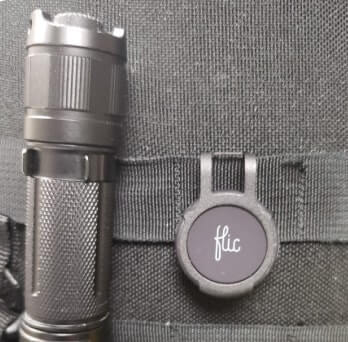
That's where Shortcut Labs comes in. Flic is a small wireless button that pairs over Bluetooth with the lone worker app on the worker's phone:
- One press raises the alarm through the app, with the phone left in a pocket or bag. Flic buttons support single press, double press and hold, so an app can use one action for "I'm OK" check-ins and another for an alarm.
- Worn where it's reachable: on a lanyard, belt clip, keyring or wrist. Small and affordable enough to give every lone worker their own.
- Your existing app and responders. The alert goes through the lone worker app and its monitoring, so it lands with the people your procedure already names. Shortcut Labs does not run a monitoring centre.
- A record that it works. Alarms and check-ins run through your lone worker app, so they sit in its records with everything else: the evidence regulators ask for when they check that your procedure is tested.
- For man-down risk, Flic Duo adds automatic fall detection. A server-side algorithm flags a likely fall and the app can raise an alert if the worker doesn't cancel. It may not detect every fall and will produce some false alarms, it needs a connection to deliver the alert, and it supports your lone working arrangements rather than replacing them.
One honest note: a phone-paired button works where the phone has coverage, so keep your check-in schedule for dead zones, and let your risk assessment decide where a task needs a second person. Flic supports your lone working program; it does not replace your risk assessment or legal review of your obligations.
Already use a lone worker app? Ask us whether it supports Flic, or we'll point you to one that does in your market. Build a lone worker app? Flic support can be added through our free App SDK.
Frequently asked questions
Is it illegal to work alone?
No. Working alone is legal in the US, UK, EU countries, Canada, Australia and New Zealand, provided the employer has assessed and controlled the risks. Some specific tasks can't be done alone, such as entering permit-required confined spaces or certain live electrical work, and Sweden bans lone work where there is a tangible risk of violence.
Does OSHA have a lone worker standard?
No. OSHA has no general working alone standard, only sector rules such as confined space attendants and shipyard accounting. Employers still have a duty under the General Duty Clause to protect workers from recognized serious hazards, and OSHA has used it after violent incidents. OSHA calls lone worker devices recommendations rather than requirements.
What does HSE require for lone workers in the UK?
HSE requires employers to include lone working in their risk assessment, then train, supervise and monitor lone workers and have tested emergency procedures. Monitoring can be supervisor visits, scheduled calls, return-to-base checks or alarm devices. A separate lone worker risk assessment is not legally required, and BS 8484 is a voluntary code of practice.
Are lone worker devices required by law?
For some workers, yes: New York's large retailers (silent response buttons from January 2027), Washington's isolated janitors, guards and hotel staff (panic buttons), hotel staff in many US cities and states, and convenience store and late-night retail workers in Alberta and Saskatchewan (worn personal emergency transmitters). Everywhere else, the law requires that lone workers can raise the alarm and get help quickly and leaves the tool to the employer. Most use a lone worker app, often with a wearable alarm button.
What counts as an adequate lone worker check-in procedure?
A written procedure with set check-in intervals matched to the risk, a named person who makes or receives the contact and records it, an end-of-shift check, and clear steps if the worker can't be reached, up to sending help. British Columbia's regulation is the clearest model, and it accepts a one-way system that raises an alert if the worker doesn't reset it.
What are the rules for ensamarbete in Sweden?
Since January 2025 the rules are in AFS 2023:2, chapter 6, replacing AFS 1982:3. Where lone work carries a tangible risk of injury, the employer must arrange for the worker to get quick help in an emergency. If acceptable safety can't be arranged, the work must not be done alone, and lone work with a tangible risk of violence is banned (chapter 5).
Is a mobile phone enough for lone worker safety?
Sometimes. Most regulators accept a phone where the worker can use it and coverage is reliable. But Safe Work Australia warns mobile phones cannot be relied upon in many locations, Washington's rules reject signals that depend on poor coverage, and Swedish and French guidance point out that a worker who is injured or unconscious can't make a call. That's why many employers add a wearable alarm button, automatic alerts or scheduled check-ins.
Which jobs can't be done alone?
It depends on the country, but common examples are entering confined spaces, work near live electrical conductors, diving, transporting explosives and fumigation (HSE), work at height on fall-arrest equipment (France), and any lone work with a tangible risk of violence (Sweden). Northern Ireland adds health and social care work with unpredictable clients.
This guide is provided for general information by Shortcut Labs and is not legal advice. Verify current requirements with qualified counsel in your jurisdiction.
Add a one-press alarm to your lone worker app.
Already use a lone worker app? Ask us whether it supports Flic, or we will point you to one that does in your market. Build one? Add Flic through our free App SDK.
- One press raises the alarm, phone stays in the pocket
- Works with your existing app and responders
- Press, double press and hold for check-ins and alarms